Skip to content
Hogan's Alley

Vancouver

The history of the neighbourhood that inspired our name.

Before Vancouver

Hogan's Alley

"There has been a Black community in Vancouver since before there was a Vancouver."
- Wayde Compton, author

In 1858, Governor James Douglas invited Black Americans from California to settle in British Columbia. They came first to Victoria and Salt Spring Island, then to Vancouver. By the early 1900s, Black porters working the Great Northern Railway settled in the blocks between Union and Prior streets, Main and Jackson. Homesteaders from Alberta, families originally from Oklahoma, followed. The neighbourhood they built became known as Hogan's Alley.

By the 1940s, nearly 800 Black residents called Strathcona home. They didn't just live here. They built here. Restaurants, nightclubs, churches, and businesses, block by block, from nothing.
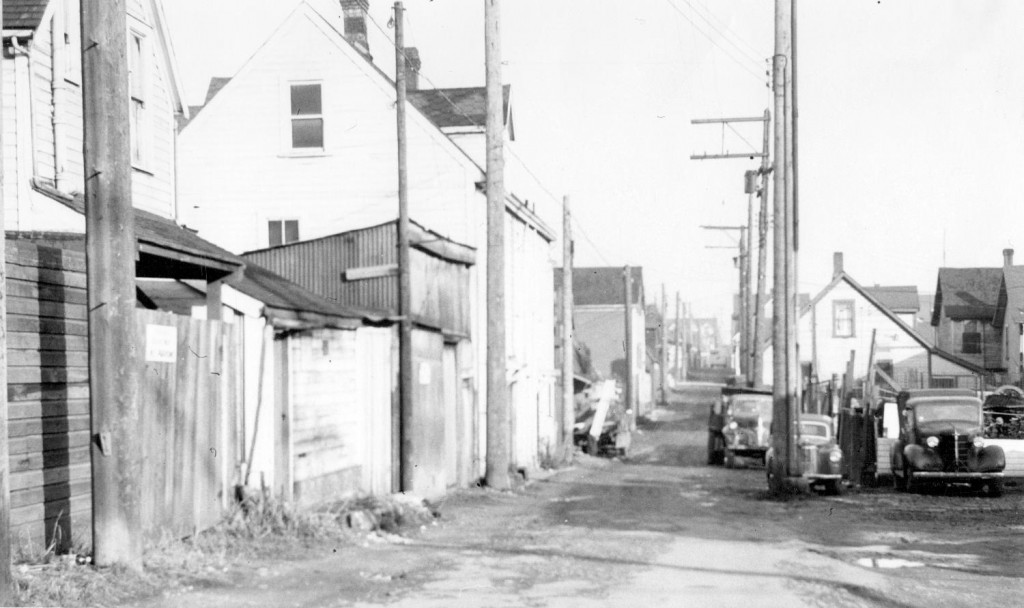
View of Hogan's Alley, Vancouver, April 1958 - the lane between Union and Prior Streets
Hogan's Alley, April 1958. A.L. Yates, photographer · City of Vancouver Archives, Item Bu P508.53
The Builders

A Community Made Something Beautiful

Hogan's Alley wasn't one hero's story. It was built by dozens of entrepreneurs, musicians, cooks, and church founders, people who created a thriving cultural hub in a city that often refused them entry anywhere else.

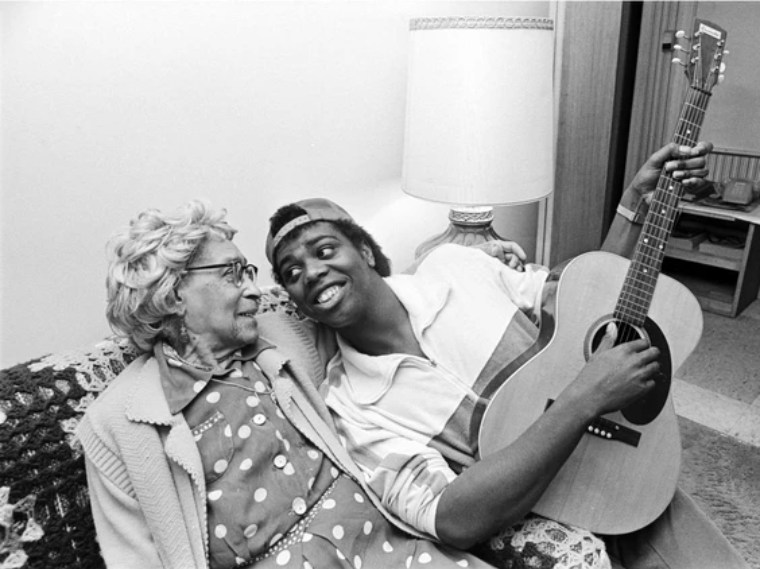
Nora Hendrix celebrating her 99th birthday with grandson Henri Brown at the Biltmore Hotel, 1982

Nora Hendrix

Community Founder

Immigrated from Tennessee in 1911. Co-founded the Fountain Chapel, Hogan's Alley's only Black church, and cooked at Vie's Chicken & Steak. Her grandson Jimi spent summers in her home on Union Street.

Photo: Bill Keay, 1982 / Vancouver Sun
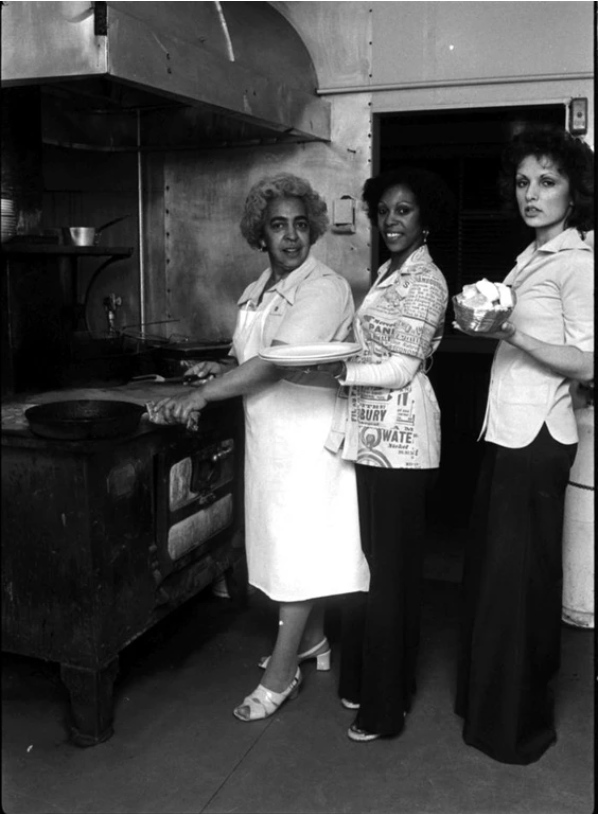
Adelene Ellen Alexander Clark and her daughter Vie Clark in the kitchen of Vie's Chicken and Steak House, 209 Union Street, November 1976

Vie's Chicken & Steak

The Late-Night Institution

Open till 5 a.m. at 209 Union Street, Vie's was where Louis Armstrong, Ella Fitzgerald, Nat King Cole, and Cab Calloway ate after late shows. Named after founder Vie Moore, it was run for decades by her family. "At Vie's, everyone got equal treatment and great food."

Photo: Deni Eagland, 1976 / Vancouver Sun
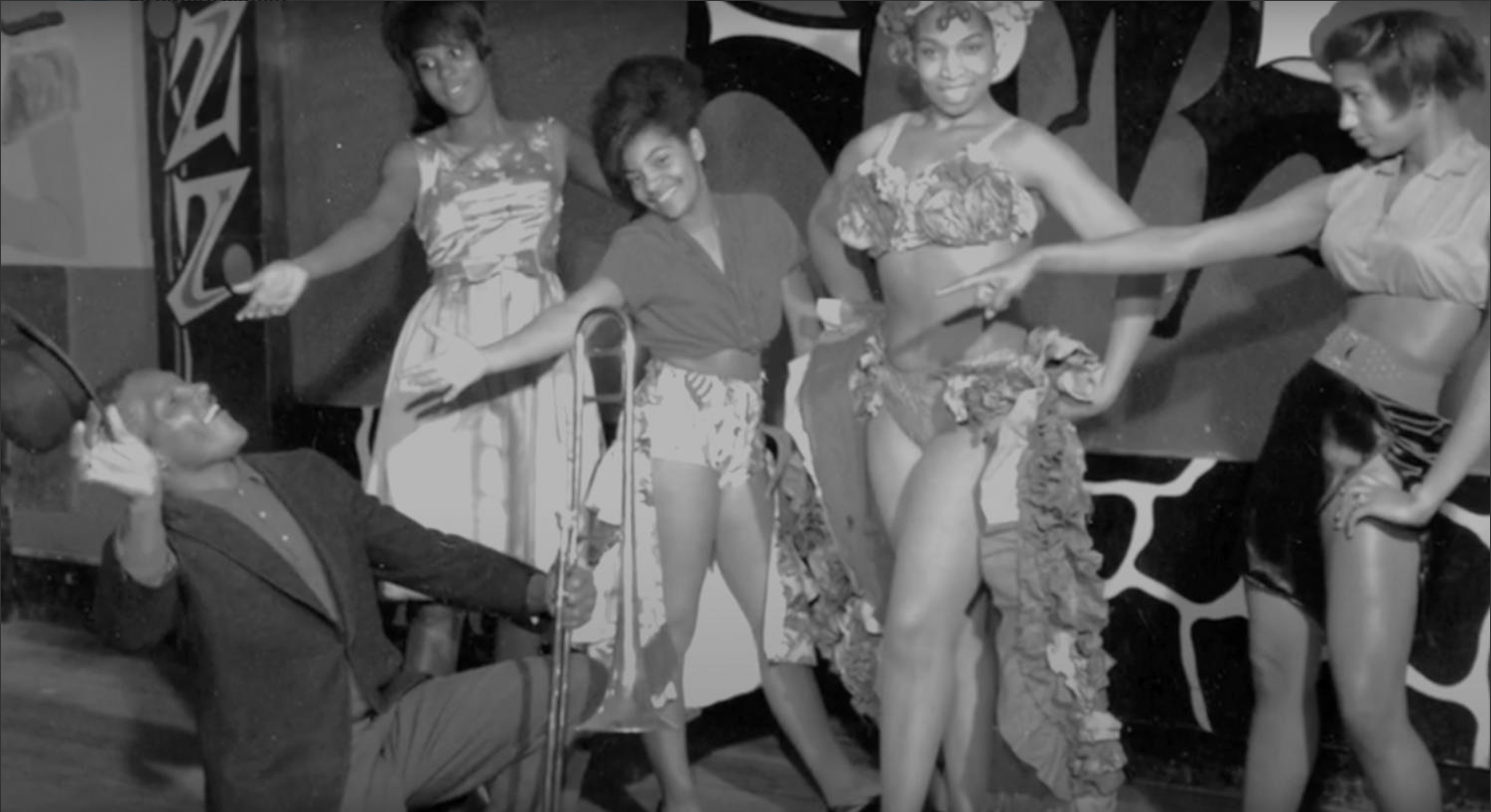
A floorshow at the Harlem Nocturne nightclub on Hastings Street, Vancouver's only Black-owned club when it opened in 1957

The Harlem Nocturne

343 Hastings Street

Opened in 1957 by trombonist Ernie King and dancer Choo Choo Williams, the Harlem Nocturne was the city's only Black-owned nightclub. Famous for its floorshows, jazz, and late-night energy. Their daughter Lovena Fox still keeps the memory alive.

Photo: Courtesy Lovena Fox
BC Black History Awareness Society → Canadian Geographic → Vancouver Heritage Foundation →
What Was Taken

Erased from the Map

It didn't happen overnight. First, the City of Vancouver stopped collecting garbage. Stopped maintaining the roads. They bought residential properties and left them vacant, let them rot. Then they declared the neighbourhood "blighted" and used that as justification to demolish it.

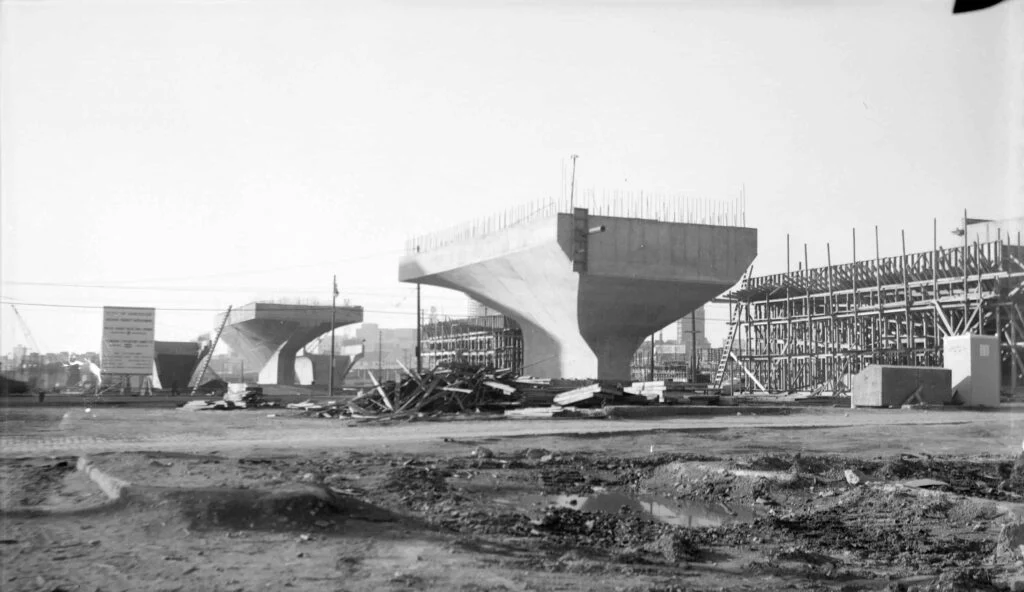
By 1967, more than a dozen blocks had been levelled for the Georgia Viaduct, the first phase of an interurban freeway that would have gutted Chinatown and Gastown too. Community activists like Bessie Lee and Mary Lee Chan formed SPOTA and fought back. They saved Chinatown. They saved Gastown. But Hogan's Alley was already gone.

"An entire community was displaced, scattered, erased from the map, but not from memory."

Nearly 800 residents were dispersed across the city. The jazz clubs, the chicken joints, the barbershops, the Fountain Chapel, all of it demolished. What replaced a living community was a concrete viaduct and empty lots that sat unused for decades.

Construction of the Georgia Viaduct, 1971 - the freeway that demolished Hogan's Alley
Georgia Viaduct construction, 1971 · City of Vancouver Archives, CVA 447-374 · Photographer: Walter E. Frost
What Remains

Not from Memory

The spirit of Hogan's Alley never died. In 2022, Vancouver City Council struck a deal with the Hogan's Alley Society to build a Black Cultural Centre, rental housing, childcare, and small business space on the original land. Nora Hendrix Place, 52 units of supportive housing on Union Street, already stands. A street now bears her name.

We chose this name because we believe in what those entrepreneurs, musicians, and makers built. They created something remarkable in a place that tried to erase them. We carry that forward, not as a memorial, but as a continuation. Three African immigrants building a brand in the same city, drawing on the same creative energy, making something from nothing.

Every jacket we make carries that story.

Nora Hendrix Vie's Chicken & Steak Harlem Nocturne Rosa Pryor Ernie King Fountain Chapel Leona Risby Eleanor Collins Hogan's Alley Society
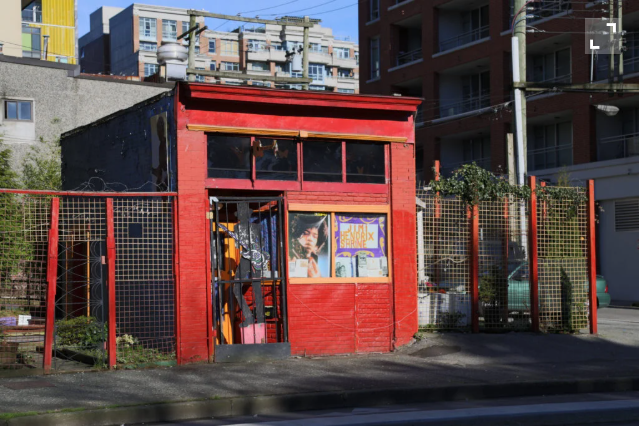
The Jimi Hendrix Shrine, a small red building in Vancouver's Strathcona neighbourhood honouring Jimi Hendrix's connection to Hogan's Alley
The Jimi Hendrix Shrine, Vancouver · Photo: Richard Jack / Flickr, 2015